
Article: Masunaga Glasses in Toronto: A Buyer's Guide to Japanese Frames
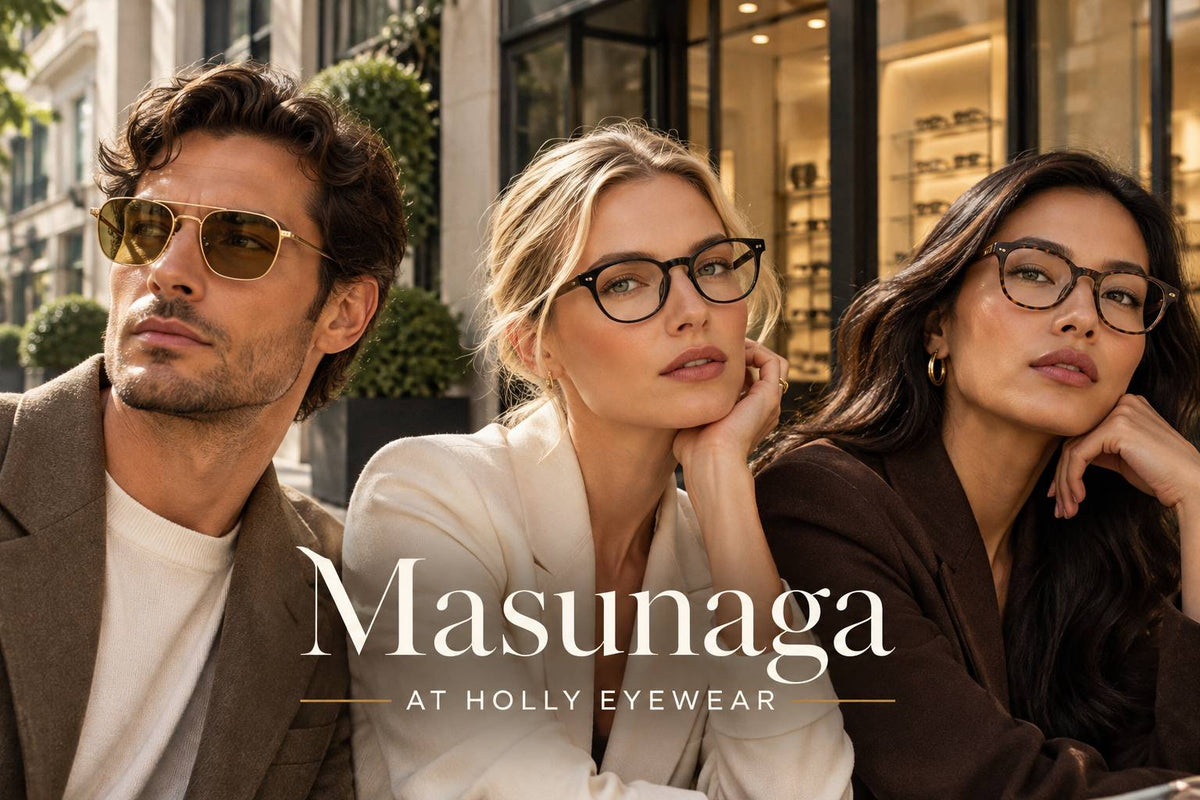
Masunaga Glasses in Toronto: A Buyer's Guide to Japanese Frames
It usually happens at the frame wall. Someone picks up a pair that looks quiet at first: a slim metal rim, a softly polished acetate, nothing shouting for attention. They put it on, check the mirror, and go still for a second. Then they flip the temple over, look for the name, and ask the question we hear most weeks: “Who makes this one?”
More often than not, the answer is Masunaga. At Holly Eyewear, our boutique at 130 Cumberland Street in Yorkville, it has become one of the brands people ask for by name, yet plenty of the people wearing it have never heard the story behind it.
Masunaga is a Japanese eyewear maker founded in Fukui in 1905, and it still makes its frames in Fukui City today. What sets the frames apart is fit, finish and more than a century of craft, so the best way to judge one is to try it on and have it adjusted to your face.
What is Masunaga, and where are the frames made?
Masunaga Optical is a Japanese frame maker founded on June 1, 1905, in Fukui, a snowy region on Japan’s west coast. Its head office and main factory are still in Fukui City, and the company designs and produces optical frames for European, American and Asian markets. Holly Eyewear carries two of its collections, plus a few designs by Kazuo Kawasaki.
The founder, Gozaemon Masunaga, didn’t start out in eyewear. According to the company’s own history, he came from a well-known farming family and worried about his village: heavy winter snow meant months without farm work, and people left to find jobs elsewhere. His brother Kohachi suggested eyeglass-making as a winter trade, reasoning that as more people learned to read, more people would need glasses. Gozaemon brought craftsmen in from Osaka, and eyewear-making in Fukui officially began on June 1, 1905.

So, the whole thing started as a plan to keep a village employed through the winter. As brand origin stories go, it’s refreshingly short on garages.
Why is Fukui so closely tied to Japanese eyewear?
Masunaga organized its craftspeople into teams under lead makers, and that workshop system trained skilled frame-makers who spread across the region. By 1911 there were 13 eyewear factories around Fukui, and Masunaga’s frames had won a gold prize at a national exhibition. Today, according to Masunaga, 97 per cent of Japanese-made optical frames come from Fukui.
The teams competed with each other to make better frames, and the founder took responsibility for every finished piece. That habit of shared skill and quiet competition is a big part of why “made in Fukui” carries weight with opticians: it describes a region where frame-making has been the local trade for more than a century, not one factory line.
The recognition kept coming. Masunaga’s company history notes that the Emperor was presented with three Masunaga frames on a visit to Fukui in 1933, and that the brand has won several Silmo d’Or international eyewear awards, including the 2014 sunglass prize for a Masunaga designed by Kenzo Takada frame and the 2015 optical frame prize for the GMS-106.
What’s the difference between Masunaga and Masunaga designed by Kenzo Takada?
The main Masunaga line is the company’s own design work: balanced, understated shapes in titanium, Japanese acetate or both, made to be worn every day. Masunaga designed by Kenzo Takada is a collaboration with the Japanese fashion designer, known for vintage-inspired shapes and fine engraving on the bridge and temples that recalls 1920s jewellery.
Think of it as tailoring versus couture. Both get the same care in the making. One is designed to disappear into your day; the other is designed to be noticed from across the table. Within the main Masunaga collection, you may also spot a few frames by designer Kazuo Kawasaki, such as the Kawasaki Act 8, which take a more architectural approach.
The quickest way to compare is side by side. Browse the Masunaga collection and the Masunaga designed by Kenzo Takada collection online, then try your shortlist on in store.
Are Masunaga frames worth the price?
For people who wear glasses daily, they often are. In our Yorkville collection, most Masunaga frames sit between about $500 and just over $1,000. The value shows up in details you notice after a month rather than a minute: how evenly the frame sits, how smoothly the hinges move, and how it feels at the end of a long day.
If you wear your glasses from breakfast to bedtime, they get more use than almost anything else you own, your favourite coat included. That changes the math on a well-made pair.
That isn’t the same as saying expensive equals better. A frame that doesn’t suit your face or your prescription is a poor buy at any price, which is why fit comes before everything else.
How do I choose the right Masunaga frame for my face?
Start with fit, then shape. The frame width should match your face, the bridge should rest without pinching or sliding, and the temples should sit comfortably behind your ears. Then choose a shape that balances your features. Trying frames on in person, with someone adjusting them as you go, is the fastest way to know.
If you’d like a head start, our guide on how to choose frames for your face shape walks through the basics. Fit matters for comfort, and it matters for how long a frame lasts, too: a frame that keeps sliding gets handled more, which is exactly what wears out hinges and nose pads. Our article on durable glasses explains why.
Walk-ins are welcome for optical, so you can drop by and try a few on. Our team will adjust the one you choose so it sits properly from day one.
Can I get prescription lenses in Masunaga frames?
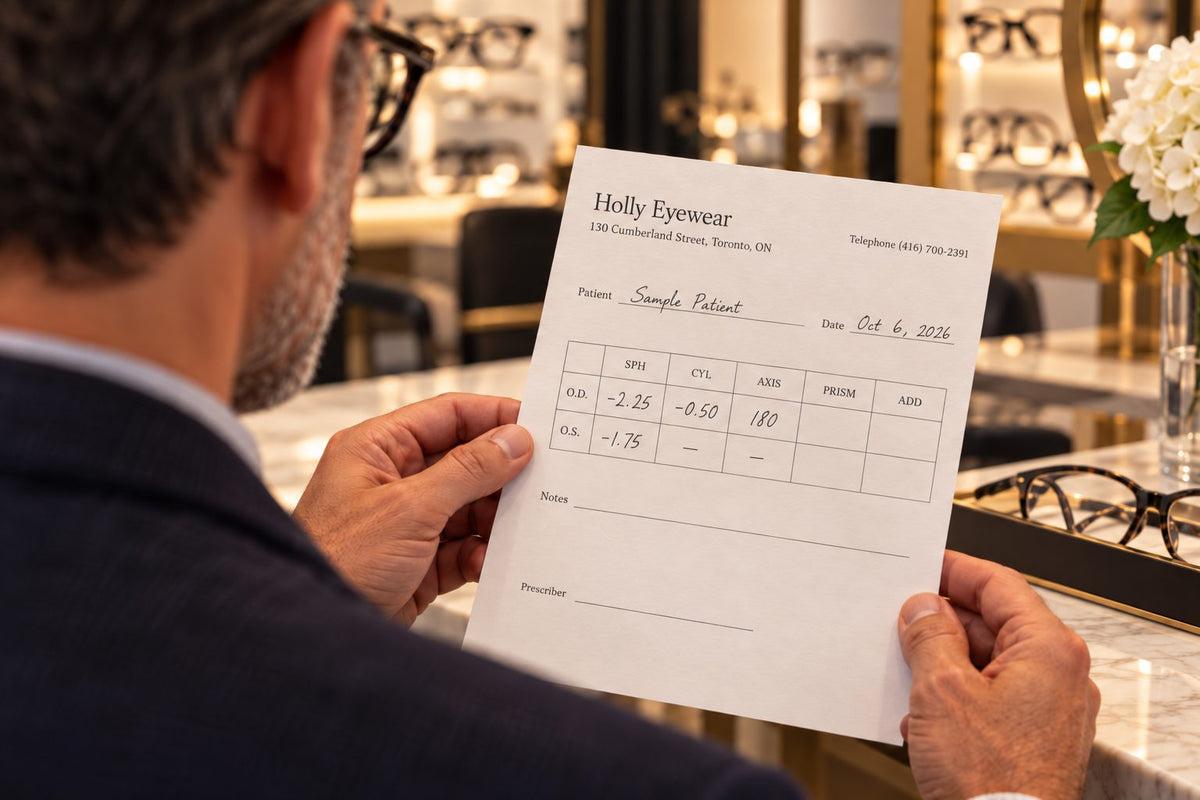
Yes. Masunaga’s core business is optical frames, so most styles are made to take prescription lenses. Before you order, make sure your prescription is current. The Canadian Association of Optometrists recommends a comprehensive eye exam every two years for low-risk adults aged 20 to 64, and annually, or as recommended, from age 65.
That guidance comes from the CAO’s position statement on eye exam frequency. Your optometrist may suggest a different schedule based on your eye health. When you’re choosing lenses, ask about lens options, since the size and shape of a frame affects which lenses will suit it best.
At Holly Eyewear, Dr. Mateo Vacacela sees patients for comprehensive eye exams on Tuesdays. If you’re curious what that exam covers beyond reading the letters on the chart, Beyond 20/20 has the details. A beautifully made frame with an out-of-date prescription is still a beautifully made frame you can’t quite see through.
Frequently Asked Questions
How do you pronounce Masunaga?
Mah-soo-nah-gah, with roughly even weight on each syllable. Say it with confidence at the frame wall and nobody will check.
Does Holly Eyewear carry Masunaga sunglasses?
Yes, mostly in the Kenzo Takada line. The Masunaga designed by Kenzo Takada collection includes a range of sunglasses, while the main Masunaga collection is almost entirely optical frames, with the occasional sunglass style. Stock changes through the year, so check the collection pages or call the boutique before you make a special trip for one style.
Are Masunaga frames made of titanium?
Many are. Masunaga works in titanium, Japanese acetate or a combination of the two, and each product page lists the materials for that frame. Titanium frames tend to be light, which a lot of people appreciate in a pair they wear all day.
Can I order Masunaga frames online from Holly Eyewear?
Yes. Both collections can be ordered at hollyeyewear.com. If it’s your first Masunaga frame, we’d still suggest trying it on in Yorkville first. Two sizes that look identical online can feel quite different on your face.
The easiest way to understand Masunaga is to wear one for five minutes. Browse the Masunaga collection and the Masunaga designed by Kenzo Takada collection, then visit us at 130 Cumberland Street, Yorkville, Toronto or call (416) 700-2391. Walk-ins are welcome for optical. If your prescription is due, book an eye exam in Yorkville with Dr. Mateo Vacacela, who sees patients on Tuesdays. You can request an appointment online.